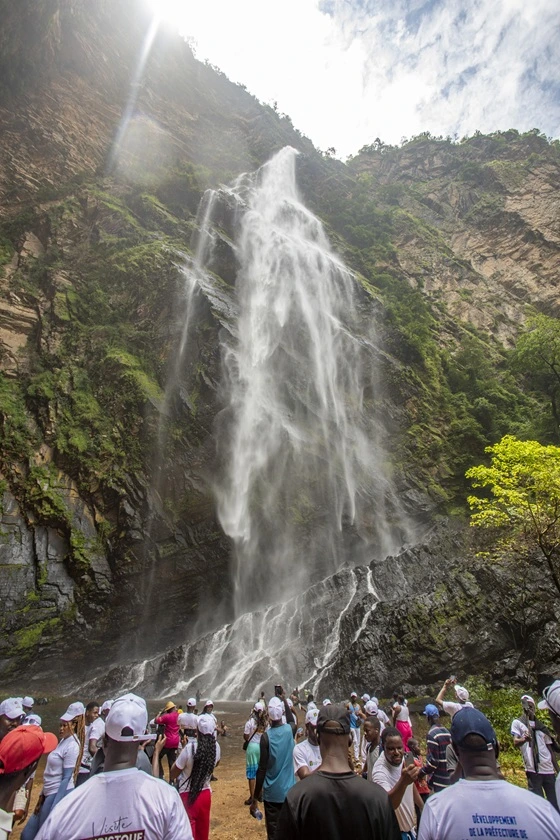
Tucked away in the mountains of central Togo, the Souroukou waterfall is described by the Togolese authorities as the highest in the West African sub-region. With its spectacular waterfall, vibrant culture and history of resistance, this still little-known site deserves its place amongst the country’s major natural destinations.
Introduction to the waterfall
The Souroukou Waterfall is situated in the Mô Prefecture, in the Central Region, in the Tassi Mountains. It is fed by two rivers that converge to form the waterfall. The name of the village, Souroukou, means ‘to gather’ in the Tem language.
Factsheet
- Country : Togo
- Region : Power station
- Prefecture : Mô (Mô1 commune, Boulohou canton)
- Village : Souroukou, about 15 km from Djarkpanga, the prefecture’s administrative centre
- Height : approximately 190 m, or nearly 200 m according to official sources
- Access : drive to the village, then a walk of about 2 km
- Wet season : June to December (seasonal waterfall)
A record-breaking waterfall?
The Togolese Ministry of Culture and Tourism and several national media outlets describe it as the highest waterfall in West Africa, with a height of 190 m. Some sources cite a figure of 230 m: this actually refers to the site’s altitude above sea level, although some local officials also use it to denote the height of the waterfall. It is therefore prudent to estimate the height of the waterfall itself at around 190 to 200 m.
History and heritage
According to local tradition, the waterfall was discovered between 1700 and 1745 by the Baro clan, who settled permanently in the region. The site served as a refuge from slave hunters, and later as a symbol of resistance against invaders, particularly the Germans. The village still preserves other reminders of this period: the grave of the warrior Kloun, who fell during the Battle of Souroukou; a wall over 100 metres long; and a water source considered to be mysterious.
Culture and traditions
The population of Souroukou is cosmopolitan: it includes, in particular, the Tem, Kabyè and Bassar peoples. The village is renowned for its traditional dances, including the Goumbé, the Kagbáŋа (hunters’ dance), the Gbèlè and the Kétékpé.
How to get there
From Bassar, you can reach Souroukou by car via a road of around 65 km. The village is situated 15 km from Djarkpanga and 30 km from Tindjassi, the prefecture’s second-largest town. Once in the village, the waterfall is about a 2 km walk eastwards along steep paths: make sure you wear sturdy shoes and take plenty of water with you.
When is the best time to go?
As the waterfall is seasonal, the best time to visit is during the months when water is flowing, from June to December. The vegetation is lush at this time and the flow is impressive.
A project to promote tourism
Togo is preparing to develop the site. A three-year project worth 1.55 billion CFA francs aims to open up the area and develop tourism infrastructure. The authorities hope to create jobs for young people and generate income for the local population. Visits by journalists, artists and hikers have already helped to raise the site’s profile.
Tips for responsible travel
- Enlist the help of guides and local villagers.
- Stay on the paths and leave nothing behind.
- Ask for permission before taking photographs of people or historic sites.
- Support local businesses: food, crafts and homestay accommodation.
Souroukou combines spectacular natural beauty, a rich history and a welcoming culture. Still unspoilt, the waterfall invites visitors to discover the authentic Togo – provided they visit with respect for the local people and the environment.
